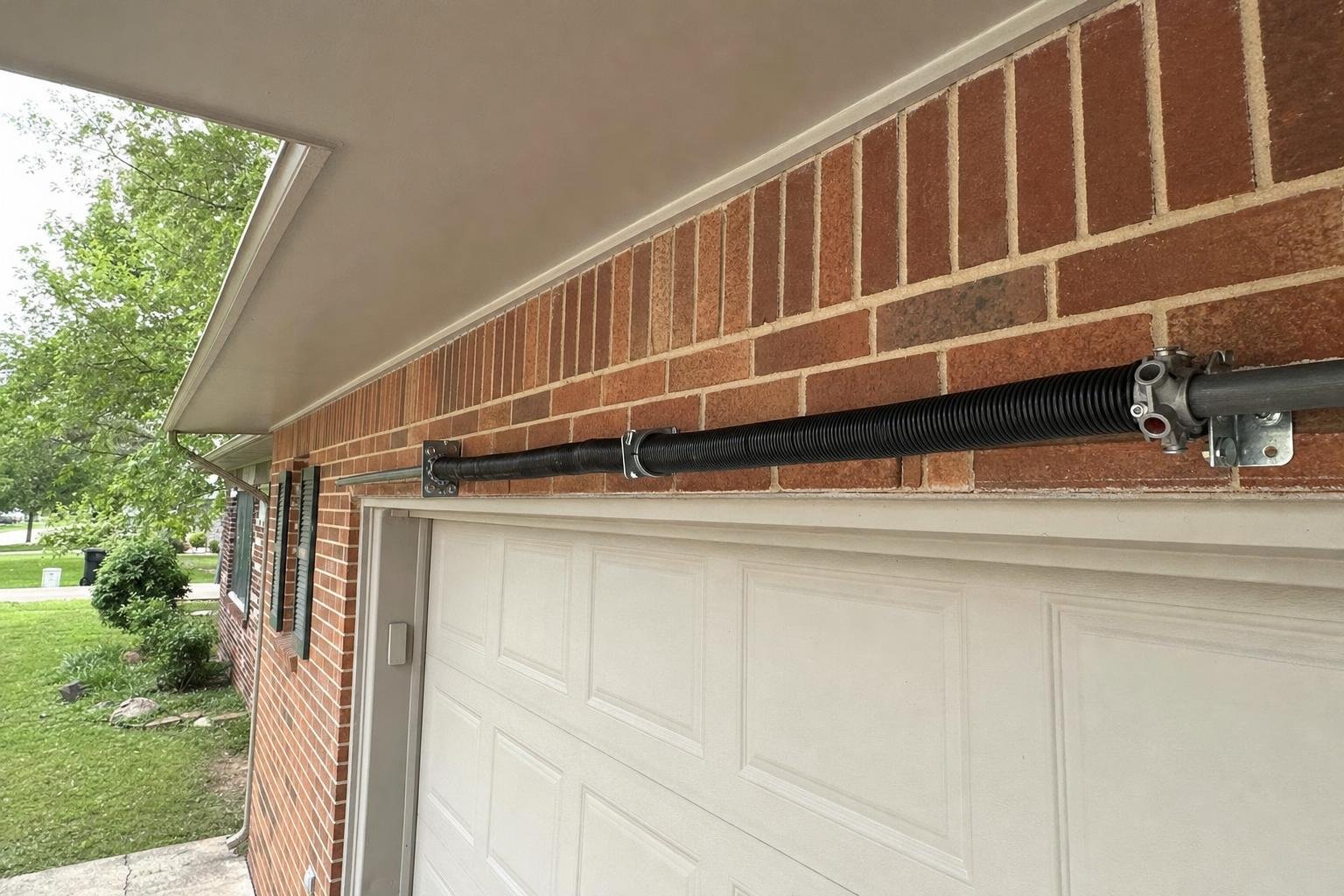
When it breaks, the door stops moving, or the opener strains to drag it up and can't, and adjusting the opener won't fix that. We replace torsion springs on garage doors in and around Lawton. It's work to leave to someone who does it regularly, because the spring is holding the door's weight.
What people notice first
The call usually starts with a sound or a stall. A bang from the garage, sometimes loud enough to hear inside the house. The door lifts a few inches and stops. The opener hums and the door doesn't move, or it moves with a shudder and a strain it never had before.
Some signs are visual. A gap in the coil is the clearest one, and you can usually see where the spring separated. The door may sit crooked, one side higher than the other. Sometimes nothing looks wrong until you pull the manual release and find the door weighs far more than you can lift by hand. If that's what you found, stop there and call us.
The one that worries us is a door that keeps getting run anyway. An opener dragging a dead door up and down is doing a job it wasn't built for, and by then the repair is often more than the spring.
See also garage door cable replacement. Ready to hire for garage door repair in Lawton? Start with our home page.
Related reading: Signs That Point to Garage Door Repair (and What Causes Them) · What Happens During Garage Door Repair: The Steps Explained
What the spring is doing up there
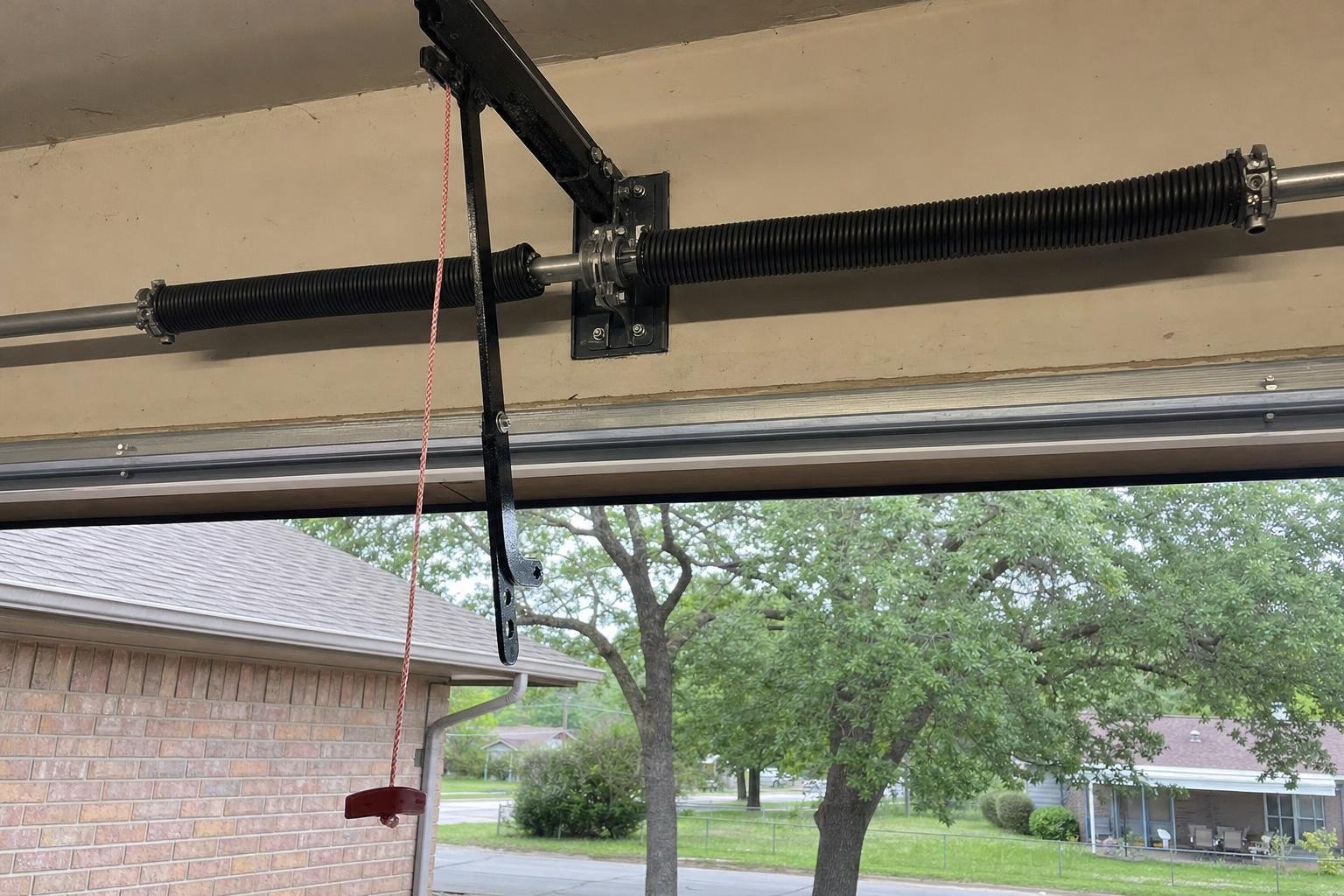
The spring sits on the torsion shaft above the door. It's wound to a set number of turns at installation, and that stored tension counterbalances the door's weight. Wound correctly, the door moves easily by hand and stays where you leave it, halfway up if you want it there. The opener only has to start and stop a door that's already balanced.
When the spring lets go, the counterbalance is gone. The full weight of the door lands on the opener's drive and the cables, which is why the opener hums instead of lifting.
Once the spring is off, the damage we find is usually not in the spring. It's the wear on the cables, rollers and opener from the time the door ran with nothing balancing it. We look for that before we quote, because the spring price only holds if the rest of the door is sound.
What we check before we put a number on it
We start at the door and work through it in order: the springs and torsion shaft, the cables and the drums at the ends of the shaft, then the rollers, hinges and track. We also look over the panels for dents or cracks. A typical range is something we can give you on the call, and the figure gets fixed after we've had our hands on the door.
With a broken spring we don't run the door on the opener to test it, since that only does more damage. The inspection is by eye and by hand. After the new spring is in, we check the door in motion. Does it sit level when it's down? Does it stay where it's stopped partway? Does the opener take it up smoothly, or does it pull hard at the start?
The repair, start to finish
We take the old spring off the torsion shaft and slide the correctly oriented replacement spring onto it. Then we wind the new spring in quarter-turn increments to the number of turns the spring manufacturer specifies. Winding in quarter turns lets us count accurately and feel anything binding as it happens.
The tools are modest: a stepladder and an adjustable wrench do most of it. The care is in the winding. Once the spring is wound, we set the door, test the balance and travel, and cycle it a few times to confirm the opener isn't straining.
If we find cables, rollers or an opener that need attention, that adds time to the visit. It goes into the quote before we start, not after.
What the repair costs and what moves that number
Replacing the spring on one garage door, parts and labor together, runs $125 to $300. That covers the spring, the winding and the test of the door afterward.
You'll land near the bottom of that range when the spring is the only thing that failed and the rest of the door checks out. It climbs when the door was run on the broken spring and the opener or cables took a beating, when that door's weight calls for a heavier spring, or when there's damage beyond the spring.
Replacing the whole door is a different job with a different number. It comes up when the panels or the door's structure are past what any spring will fix. When we see that, we say so up front, because a new spring on a door in that shape just brings the same trouble back in a few months.
Hail, freezes and what a replacement door has to meet
Lawton gets occasional winter freezes, and the freeze-thaw movement can leave a door sitting differently than it did in the fall. A door that's out of adjustment makes the spring and the opener work harder, so we check how it sits and moves while we're there.
Hail is a recurring hazard here, and May is the most active month. After a hailstorm, look over your door panels and glazing. Dented panels or cracked glazing are separate from the spring, and new springs won't fix them. If we see that damage, we'll tell you what it means for the door.
If damage pushes you toward replacing the door, note that as of October 2026 Oklahoma's adopted 2024 Residential Code is the statewide minimum for one- and two-family homes, and it requires wind-rated garage doors. A replacement door has to meet that. Spring work doesn't change the door you already have. It just gets it moving again.
A short call is usually enough, and there's no pressure to book.