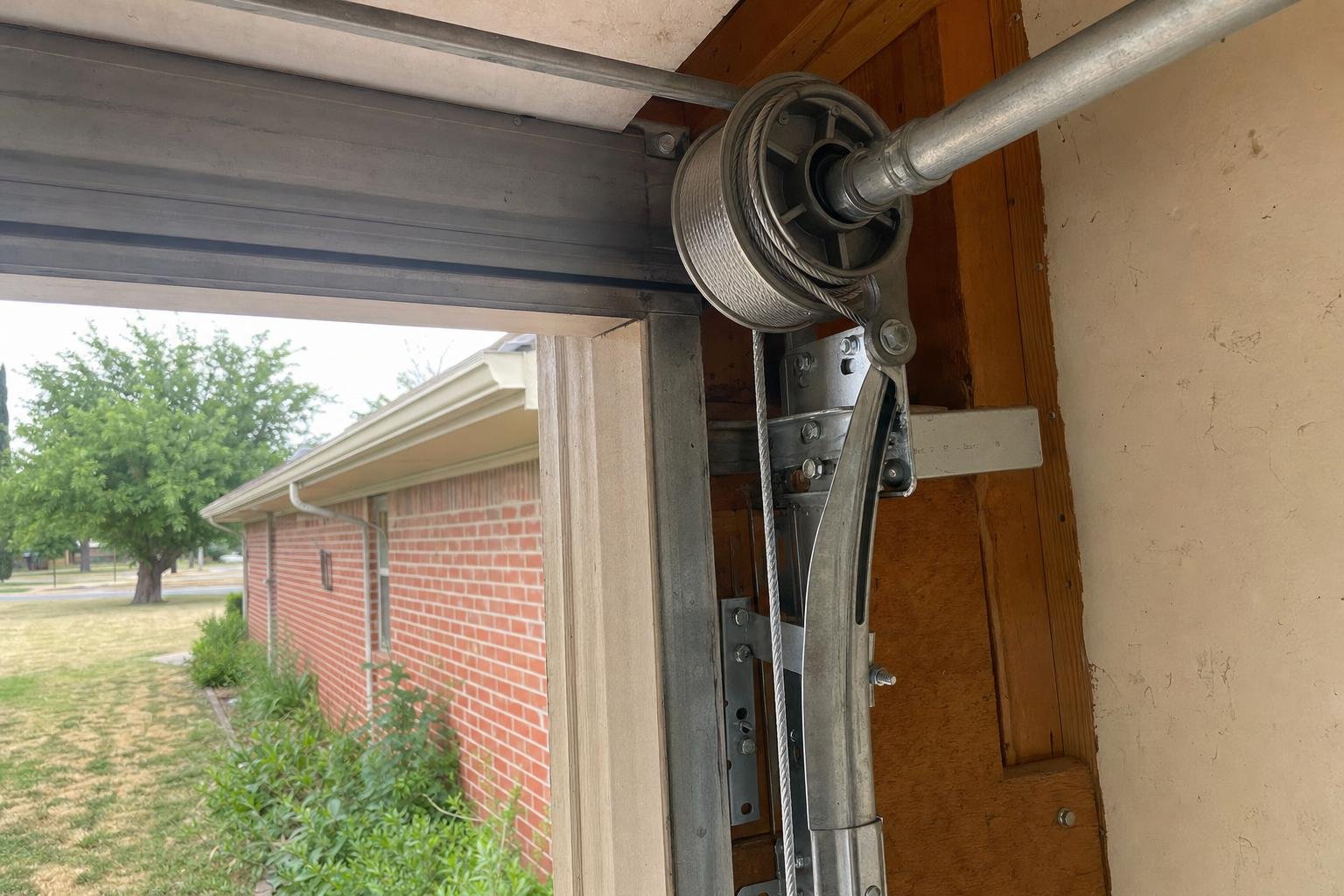
It carries the spring's lift down to the door. When one frays, jumps its drum or snaps, the door stops sitting square. It hangs low on one side, drags in the track, or won't move. Replacing the pair, resetting the drums and rebalancing the door is the work, and it is most of what we do on doors that are otherwise sound.
The signs that point at the cable
The clearest sign is a door that has gone crooked. One corner sits lower than the other, and the door looks like it is leaning in the opening even before it moves. Run it anyway and the low side snags on the jamb or the track. Sometimes you can see the problem: a cable lying slack across the track, or wound over itself on the drum instead of sitting in its groove.
Other times the door looks fine and just feels off, with one side lifting before the other. If the whole door feels dead heavy from the first inch, that is usually the springs. If the problem is one-sided or uneven, or you can see the line itself, that points at the cable. Not every door sorts out that cleanly, so we confirm it with the door in front of us.
The one that can't wait is a cable that has already come off, with the door sitting down on one side. The door is then hanging on a single line and a bottom bracket that was never meant to carry it alone. Stop running it, leave it where it is and call. Cycling a door in that condition is how a bent bracket turns into a bent panel.
Often paired with garage door opener repair. Need garage door repair in Lawton? Start on our home page.
Worth a read: Comparing Garage Door Repair Quotes: What Is Worth Checking · Budgeting for Garage Door Repair: Real Price Ranges Explained
What that line is actually carrying
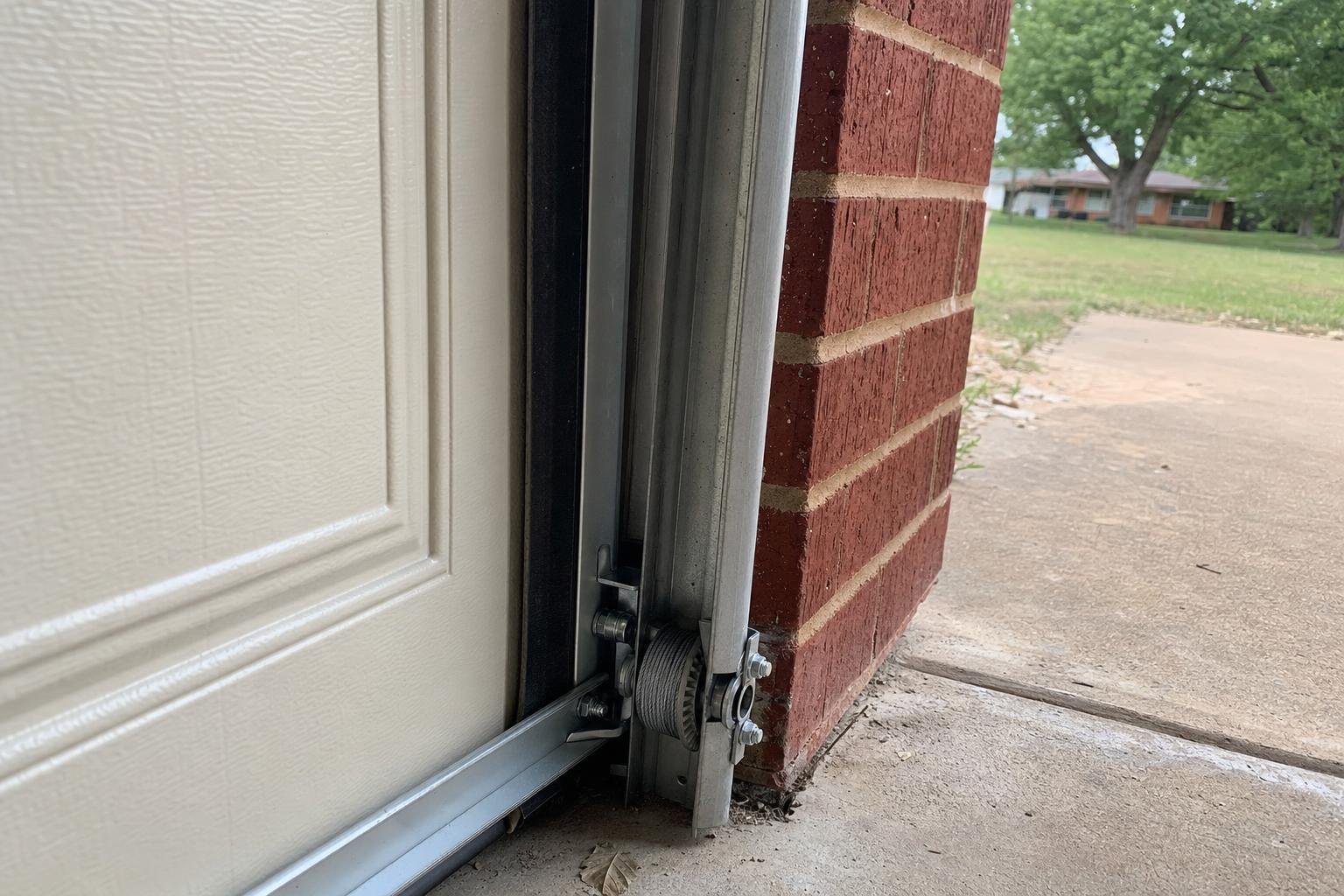
The cable clamps to the bottom bracket at the lower corner of the door, runs up the side of the track, and winds onto its drum on the torsion shaft. When the shaft turns, both drums take up cable at the same rate, and that raises the bottom of the door evenly. Take one cable out of the equation and the other corner is doing twice the work it was built for.
The drum is grooved so the cable lays in one winding per groove. A line that has been running beside its groove or piling on top of itself chews at the drum and throws the whole wind off. A fresh cable strung over a bad wind inherits the same fault, so the drums get reset every time we change a pair. If we open it up and find the grooves themselves damaged, the repair changes.
The bottom brackets are the anchor holding the cable end under pull the whole time the door is down. A new cable tied to a bracket that has bent or worked loose won't stay right for long, so we check that they are structurally sound and fit replacements when they aren't. We also replace cables in pairs. When one has reached the end of its life, the other has covered the same miles, and a single new line beside an old one just moves the problem to the other side of the door.
What we look at before we quote
We watch the door travel, then look at both cables from the bottom bracket up to the drum, checking how the line is wound and whether the drum grooves are damaged. We check the bottom brackets for movement or bending. We check whether the door sits level in the opening, because a door that is out of square will wear a new cable the same way it wore the old one.
Then we lift the door by hand to feel the balance. A door that is heavy on one side, or won't hold where you leave it, is telling us the springs and the leveling need attention along with the cables. A photo of a frayed cable can't show us any of this. Groove damage, a moved bracket and how far the door has settled out of level all sit behind the drum and at the bottom corners, and they are what decide the final number.
From relieving the tension to the final balance check
We take the tension off the springs first, so nothing on the door is loaded while we work. The old pair comes off. The new cables go into the bottom brackets, using adjustable wrenches on the fittings, and then the drums get reset so each cable lays into its groove on both sides of the shaft.
With the new lines on, we restore spring tension, level the door in the opening and adjust until it sits square. Before the door ever runs under power, we lift it by hand and check the balance. Only when it passes that check do we test it with the opener.
We don't promise a duration up front, because the cable swap isn't what decides the visit. When the drums are clean and the brackets are sound, the time goes into the swap and the balance check. Groove damage, a moved bracket or a door that needs real work to come back to level makes the job longer, and we would rather tell you that with the door in hand.
What it runs, and what moves the number
A residential cable pair, including parts, labor, resetting the drums and balancing the door, runs $150 to $300. Call and we'll talk through where your door likely falls in that range.
Clean drums, sound bottom brackets and a door that levels without a fight land near $175.
That range covers the cable work only. Hail is a recurring hazard here, with May the most active month, so after a storm we look over the panels and any glazing while we're at the door. Panel damage or a door at the end of its life is a separate job with its own figure.
You can explain it on a quick call, and you'll get a clear answer.